
Objectivity and Subjectivity in Medicine
DPhil and ECR Work-in-Progress Two Day Workshop
Objectivity and Subjectivity in Medicine
DPhil and ECR Work-in-Progress Two Day Workshop
Free event – registration required.
Register here:
Day 1, Thursday 18 June 2026, 9am - 4pm | Learning Centre, Schwarzman Centre for the Humanities
Day 2, Friday 19 June 2026, 9am - 12pm | Seminar Room 00.063, Schwarzman Centre for the Humanities
This interdisciplinary workshop will bring together DPhil students and early career researchers in the medical humanities to share their ongoing research in a supportive environment. Discussion will focus on the problems of objectivity and subjectivity in medical research and practice: is there such a thing as an “objective” approach to medicine, and if not, should there be?
Medical knowledge is always situated and inevitably shaped by forms of uncertainty. We invite contributions that explore the ways in which clinical and scientific practices may reproduce structural biases, as well as how they engage with key aspects of human experience that resist quantification – such as pain, fatigue, or emotional distress. In this context, the increasing use of artificial intelligence raises further questions: does it enhance objectivity, or simply reinforce pre-existing biases?
The subjectivity of patients also generates important tensions: lived experiences do not always align with standardized scientific frameworks. We welcome contributions that examine, for instance, how such experiences may be oversimplified when translated into medical categories and terminology, or marginalized when they fail to fit pre-existing classificatory systems. We are also interested in initiatives that seek to incorporate patients’ experiences and emotions into medical practice.
In a context of increasing scepticism toward institutional medical discourse and a turn toward alternative medical practices, it is worth asking how the ideal of objectivity can be reconciled with the acknowledgment of subjective experience.
Programme:
Day 1: 18 June, 9:15 – 15:40
9:15—9:30 Welcome
Panel 1: The Subjectivity of the Doctor
9:30—09:50 Federico Bina & Aidan Runagall-McNaul (Uehiro, Oxford), Listening in Healthcare: From Subjective Experience to Normative Theories
09:50—10:10 Jodee Simpson (Leeds), Agential Intuition: Reconfiguring Clinical Objectivity through Neurodivergent Subjectivities
10:10—10:30 Jana Sedlakova (Ethox, Oxford), Ethical Stance and Radical Self-Reflection
10:30—11:05 Discussion
11:05—11:25 Coffee Break
Panel 2: Definitions of the Body
11:25—11:45 Samuel Woodward (Classics, Oxford), Questions of Subjectivity and Objectivity Surrounding the Body and its Treatment in the Hippocratic Collection
11:45—12:05 Lovro Savic (Ethox, Oxford), Concept of Recovery in Medicine
12:05—12:25 Vicky Wenchi Chu (Anthropology, Oxford), The Anatomical Reasoning and Phenomenological Perception of Body
12:25—13:00 Discussion
13:00—14:00 Lunch Break
Panel 3: Building Medical Categories
14:00—14:20 Philippa Monk (History, Oxford), The Art of Diagnosis: Differentiating Treponemal Diseases, 1905-1960
14:20—14:40 Orestis Tzirtzilakis (Modern Languages, Oxford), Hysteria Between Medicine and Culture
14:40—15:00 Nadia Ruiz & Maria Lorenz (Hannover) Social Egg Freezing: A Feminist Philosophy of Science Perspective
15:00—15:40 Discussion
Day 2: 19 June, 9:30 – 12:00
9:15—9:30 Welcome
Panel 4: Thinking about Medical Images
09:30—09:50 Anca Pop (Royal Holloway, London), “Beyond Objectivity in Medical Vision – Proposition for a Medicine of ‘Seeing’”
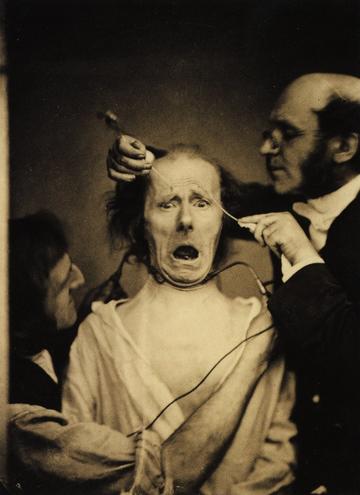
09:50—10:10 Charlotte Dewarumez (Toulouse), “Between Scientific Objectivity and Art-Historical Discourse: the case of Guillaume Duchenne de Boulogne”
10:10—10:30 Discussion
10:30—10:45 Break
Keynote talk
10:45—11:45 Helene Scott-Fordsmand (UCL, London), Slippery boundaries: Fat tissue and the collapse of the subject-object divide in anatomical dissection practices
Speaker: Dr Helene Scott-Fordsmand, Lecturer in Health, Medicine and Society, Department of Science and Technology Studies, UCL
In this talk, I combine observations of fat tissue in a medical dissection hall and existentialist philosophy, and contrast this to traditional medical humanities approaches, to argue that the material aspect of dissection teaches an important lesson about the relation between the object and the subject body in medicine. Traditionally, medical humanities urge for the recognition that medicine operates on human bodies
which are both objects and subjects, both biological organisms and encultured human beings. In anatomical dissection, for example, this means learning facts about anatomical structures while adding an existential-cultural layer addressing topics like death, donation, and autonomy. Medical students thus learn to recognise donor bodies as anatomical, epistemic objects, and as (former) subjects to whom they have moral obligations. While the combination certainly has value, this framing maintains a traditional dualist distinction between the body as object and as subject, and misses out on the inherent materiality of medicine. Invoking Sartre’s analysis of slime, I argue that fat tissue – like slime – by way of its materiality, makes boundaries between object and subject slippery. The unctuous nature of fat tissue means that it spreads and transgresses attempts of control: it sticks to gloves and instruments, making the epistemic task difficult, and it occasionally transfers on to skin, clothes, or notes, travelling with the students beyond the dissection hall, disrupting moral rituals of containment. Resisting material separation in this way, fat tissue quite literally collapses the distinction between the object and the subject of enquiry, as students themselves become both biologically and morally entangled with donors. While medical humanities can support students in seeing patients as subjects, the material human body silently teaches medical students and practitioners its own non-dualistic lessons about an entangled reality which implicates not only a more complex patient view, but an existential shift on the side of the practitioner.
Please follow the link to the Call for Papers related to this workshop.
If you have any special dietary requirements, please email: medhum@torch.ox.ac.uk
Organisers: Charlotte Dewarumez & Eleanor Kerfoot

