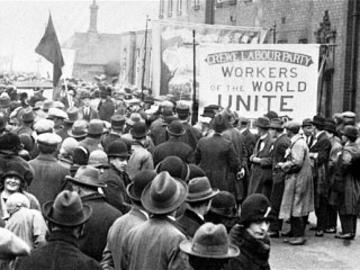
The idea that trade unions exist to advance the socio-economic interests of workers through collective bargaining with employers and lobbying the government for labour legislation has come to dominate debates about trade unions and their functions. While they are also seen to play a role in enforcing labour law standards, increasingly via so-called strategic litigation, and/or in providing support to workers in the context of their workplace grievances, the idea that trade unions might have a broader political function in supporting struggles for structural transformation, is rarely even considered. This is so despite the fact that, in the Marxist tradition, fostering the development of a working class political consciousness, facilitating the development of class-based solidarity, supporting workers’ political education, and forging links with other civil society groups, were seen as central to their role in capitalist society, part of the process through which the conditions for a mass working class political movement might be forged.
The choice between these two conceptions of trade unions - a narrow, economistic conception vs a broader political conception - not only influences trade union activities, organisation, and strategic priorities, it also has important implications for beliefs about what the legal framework relating to trade unions ought to look like, and how, in practice, it might be possible or legitimate to go about shaping it. In light of this, the purpose of this talk is to explain the features of these two conceptions in depth, before exposing the implications of adopting the political conception when it comes to: how the relative merits and demerits of the different legal frameworks that have historically regulated trade unions and their activities is assessed; which focal points for legal reform should today be identified; and what strategies of legal engagement ought be pursued. In engaging in this discussion, the talk hopes to broaden the political imagination when it comes to thinking more creatively about how trade unions might contribute to struggles for structural transformation - institutional, structural, and political constraints notwithstanding - and how they might constructively interact with the law and legal institutions in their attempts to do so.