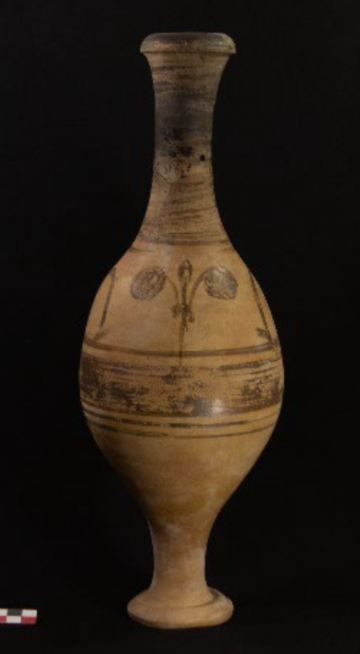
New beginnings for the Late Hellenistic period in the Konya Plain: the results of two years of fieldwork at Türkmen-Karahöyük.
Wednesday 28 January 2026, 5pm
Seminar Room 63, Schwarzman Centre for the Humanities, Oxford, OX2 6GG
Wednesday 28 January 2026, 5pm
Seminar Room 63, Schwarzman Centre for the Humanities
All welcome
Speaker:
Nancy Highcock (Ashmolean Museum, University of Oxford)
Although the Hellenistic period (c. 323- 30 BC) in Anatolia is well understood through the stone-built cities of the Aegean and Mediterranean coasts, a much patchier picture emerges further inland. In 2024, the Türkmen Karahöyük Archaeological Project (TKAP) was launched at the site of Türkmen-Karahöyük, Konya as an international research effort to better understand the long historical trajectory of a prominent settlement in this region, including its culminating phase in the 1st c. BCE-1 st c. CE. Indeed, it is during the Hellenistic period, when the rider region was known as Lycaonia, that the site was at its maximum extent. Excavation of two 10 x 10 m squares of a large Late Hellenistic domestic mud-brick building (1st c. BCE) in 2024 and 2025 revealed a destruction level that has left building’s architecture and contents in an incredible state of preservation, including a wealth of reconstructable in-situ materials. This presentation will situate these initial results in the wider study of Late Hellenistic central Anatolia and discuss the how this current work in the Konya Plain connects to the work of Oxford-based scholars in Classics and at the Ashmolean at the turn of the 20th century. The Late Hellenistic settlement at Türkmen-Karahöyük presents not only a ripe opportunity for an integrated collaboration between Classical and pre-Classical archaeologists but also on further exploring the history of archaeology within the Konya region and at Oxford.